The self-hosted appliance model: what ITbox actually delivers
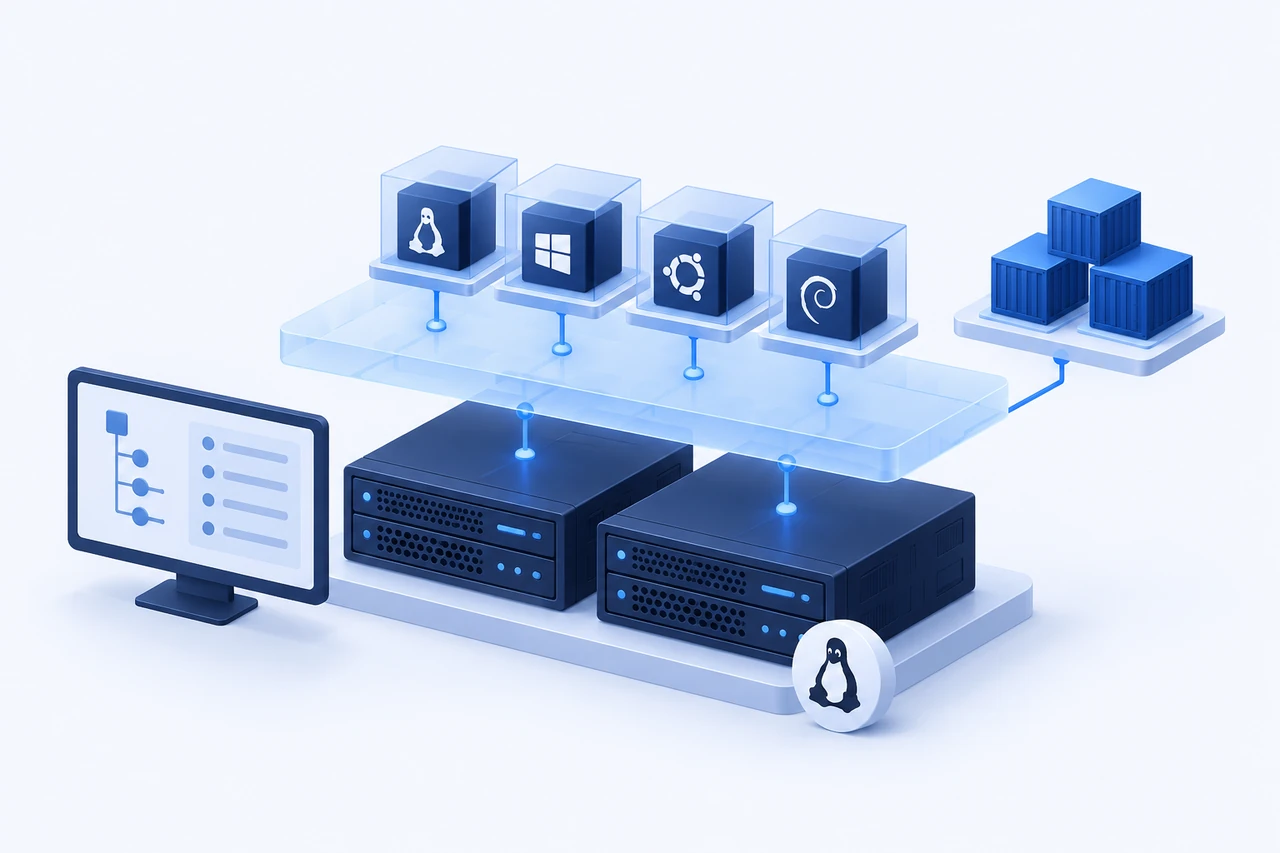
The alternative is shifting from rented cloud subscriptions to an owned, self-hosted office appliance. Under our ITbox self-hosted IT platform, essential line-of-business applications run on dedicated on-premises hardware or private hosting under your direct ownership.
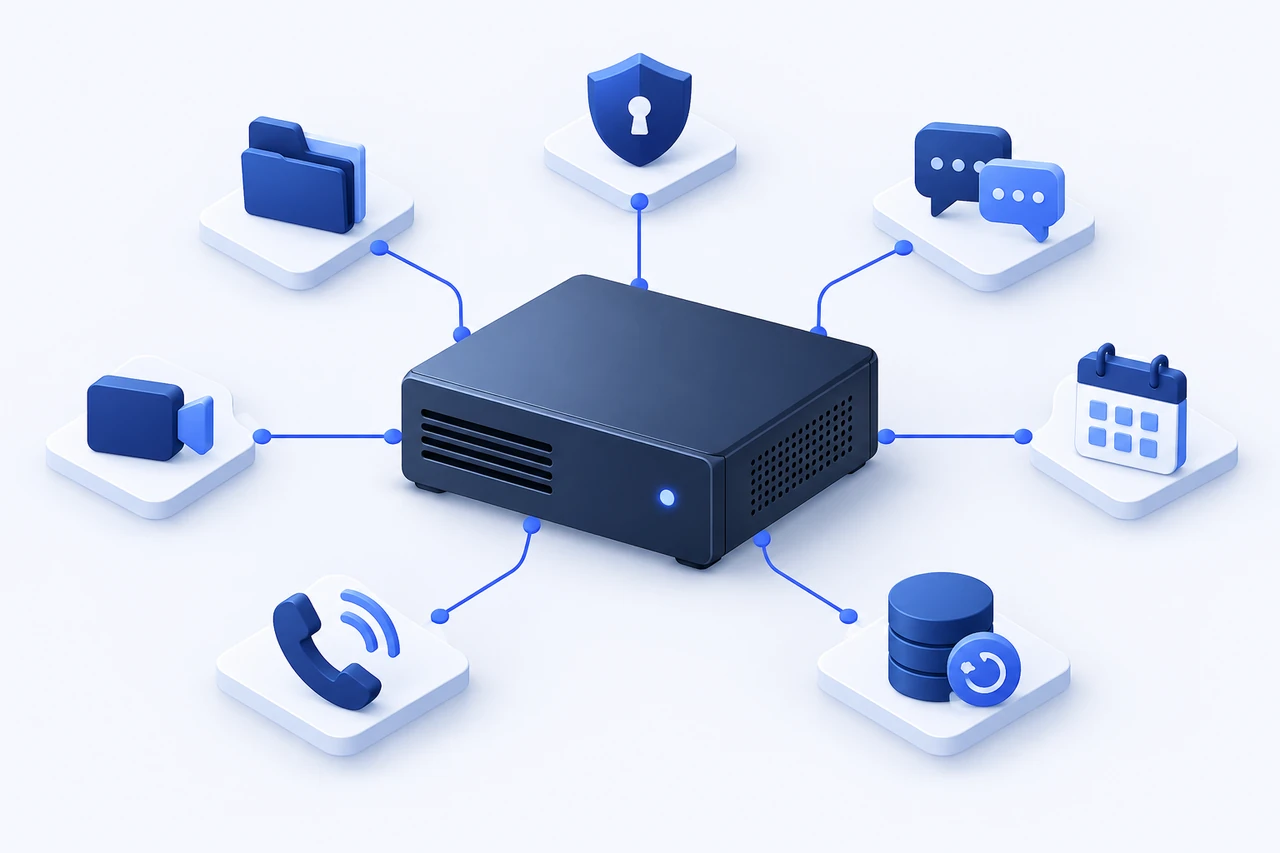
Instead of five separate logins and five compounding SaaS invoices, ITbox consolidates your core workplace tools behind a single centralized LDAP directory: encrypted WireGuard VPN for remote staff, private WebDAV network file storage, enterprise S3-compatible object storage, team knowledge wiki, real-time chat, video conferencing, an Asterisk PBX phone system, and automated encrypted backups. Once deployed, adding your 16th, 20th, or 30th team member costs zero additional license fees.
- Zero per-seat software licensing: whether you support 5 or 25 employees, the software is open-source and free
- One unified login and admin panel: single-click onboarding and instant credential revocation
- Runs on modest, low-power hardware: enterprise mini-servers drawing only 25 to 45 Watts idle
- Complete data sovereignty: all corporate documents, chat archives, and call recordings stay on your physical hardware
36-month financial modeling for a 15-user Calgary business
To understand how capital investment compares with operating subscriptions, we model a standard 15-user commercial scenario across a 3-year (36-month) operational horizon in Calgary:
In Year 1, the SaaS stack demands ongoing monthly fees that scale upward with headcount. With ITbox, Year 1 involves upfront procurement of an enterprise mini-server (equipped with 4–8 CPU cores, 16–32 GB RAM, and dual mirrored enterprise NVMe SSDs purchased directly from hardware distributors with zero markup), paired with scoped initial installation and data migration (typically 8 to 16 billable hours under an agreed written quote).
By Months 5 to 8, the ITbox deployment achieves full financial break-even. From that milestone through Month 36, the business incurs zero monthly software licensing fees. Modest ongoing allocations for routine Linux server administration, kernel patching, and offsite backup verification keep the platform hardened at a fraction of cumulative SaaS subscription invoices.
Realistic operational trade-offs and maintenance requirements
A transparent total cost of ownership analysis must address operational realities rather than pretending self-hosted infrastructure is zero-effort. Operating an on-premise server introduces physical responsibilities that commercial cloud providers bundle into their markup.
First is hardware lifecycle planning. We specify business mini-servers backed by 3-year next-business-day manufacturer hardware warranties, ensuring prompt physical component replacement in the rare event of a power supply or drive failure. Second is power resilience: every office host must be protected by an uninterruptible power supply (UPS) configured for automated graceful shutdown during extended building power disruptions.
Third is disciplined administrative maintenance. Servers require regular security patching, daemon health checks, and verified restore drills. Under our structured backup and disaster recovery processes, daily encrypted snapshots replicate locally and to private secondary storage, ensuring non-destructive recovery if a drive fails or a file is accidentally deleted.
- Hardware warranty: 3-year next-business-day vendor coverage protects physical components
- Power resilience: battery-backed UPS prevents filesystem corruption during localized electrical outages
- Automated snapshots: daily encrypted backups ensure non-destructive point-in-time recovery
- Disciplined maintenance: scheduled maintenance windows keep OS security errata current without midday downtime
Data sovereignty, Canadian privacy, and physical custody
Financial ROI is only one dimension of the self-hosted advantage; physical data custody is equally critical for Calgary businesses. When proprietary customer data, accounting records, and confidential contracts are hosted across multi-tenant commercial SaaS clouds, data is frequently stored, indexed, or routed through foreign jurisdictions subject to extraterritorial data access laws.
By contrast, an ITbox server physically resides inside your Calgary office or dedicated Canadian facility. Files never cross international borders, third-party AI models cannot scrape your internal communications for training data, and your business satisfies strict Canadian data residency standards under PIPEDA and Alberta PIPA. If external internet connectivity is temporarily interrupted, local office staff can continue accessing network files, company wikis, and internal extensions over the local LAN without disruption.
How we scope and deploy ITbox without disruption
Transitioning off fragmented SaaS subscriptions does not require a risky 'rip-and-replace' cutover. We begin with an audit of your existing software usage, data volumes, and network topology. Hardware is sized specifically for your 3-year growth forecast and purchased directly by your business with zero vendor markups.
We deploy the ITbox platform in parallel with your existing tools, run pilot tests on a small group, verify WireGuard remote access, and transfer user directories. When your staff is comfortable, final cutover happens over a weekend maintenance window. Explore our core ITbox self-hosted platform or contact our Calgary engineering team to request an agreed written estimate for your office.
This guide is part of our ITbox coverage.
Written by YYCIT Systems Engineering
We design, deploy, and manage Linux servers, OpenStack clouds, and high-reliability systems for Calgary businesses. Direct engineering access with agreed written scopes and zero contract lock-in.