Why uploading proprietary business records to public AI creates severe legal risk
The appeal of asking an artificial intelligence assistant to locate a clause in a 200-page engineering contract, summarize an internal operating procedure, or cross-reference vendor pricing sheets is obvious. However, copying sensitive corporate documents into consumer or public commercial AI chatbots introduces critical legal, regulatory, and commercial liabilities.
Most public AI platforms operate under terms of service that grant broad rights to retain user prompts, log uploaded files, or utilize input data to train future models. Furthermore, multi-tenant public cloud services rarely provide granular role-based permissions; once a document is indexed, any employee with chatbot access can inadvertently query confidential executive compensation, pending acquisition memos, or protected patient healthcare files. Under Canadian privacy legislation (PIPEDA and Alberta's PIPA), transferring unencrypted personal information to foreign third-party clouds can constitute a regulatory compliance breach.
- Public terms of service frequently permit model training on proprietary inputs and files
- Absence of role-based document access controls allows unauthorized internal data visibility
- Cross-border data transit violates Canadian data residency and industry compliance standards
- Hallucination risks: standard chat models invent convincing answers when source facts are absent
The architecture of private Retrieval-Augmented Generation (RAG)
The solution for Calgary businesses is deploying a private Retrieval-Augmented Generation (RAG) knowledge assistant. In a private RAG architecture, the language model is not trained on your private data; instead, it acts as an intelligent reading assistant that inspects a curated, permission-controlled index of your actual business documents in real time.
When an employee asks a question, the system searches an internal vector database containing vectorized chunks of approved company documents. The most relevant text segments are retrieved and passed to the model as reference context, along with a strict operational prompt: answer solely based on the provided excerpts, cite the exact source document and page number, and explicitly state when the requested information is absent. This eliminates model hallucination while providing verifiable audit trails.
Enforcing role-based access control at the retrieval layer
A properly engineered knowledge assistant respects corporate organizational boundaries. Documents must never be indexed into a single homogenous pool accessible to all staff. Instead, retrieval collections are partitioned by user role, department, and security clearance.
A sales representative querying the assistant retrieves approved product spec sheets and public case studies, but cannot query engineering CAD files or internal margin calculations. HR policies are queryable by all staff, but individual disciplinary notes and payroll records remain isolated within restricted partitions accessible only to authorized leadership tokens. This architecture ensures that AI enhances productivity without flattening essential security permissions.
Deployment options: dedicated local hardware vs private cloud
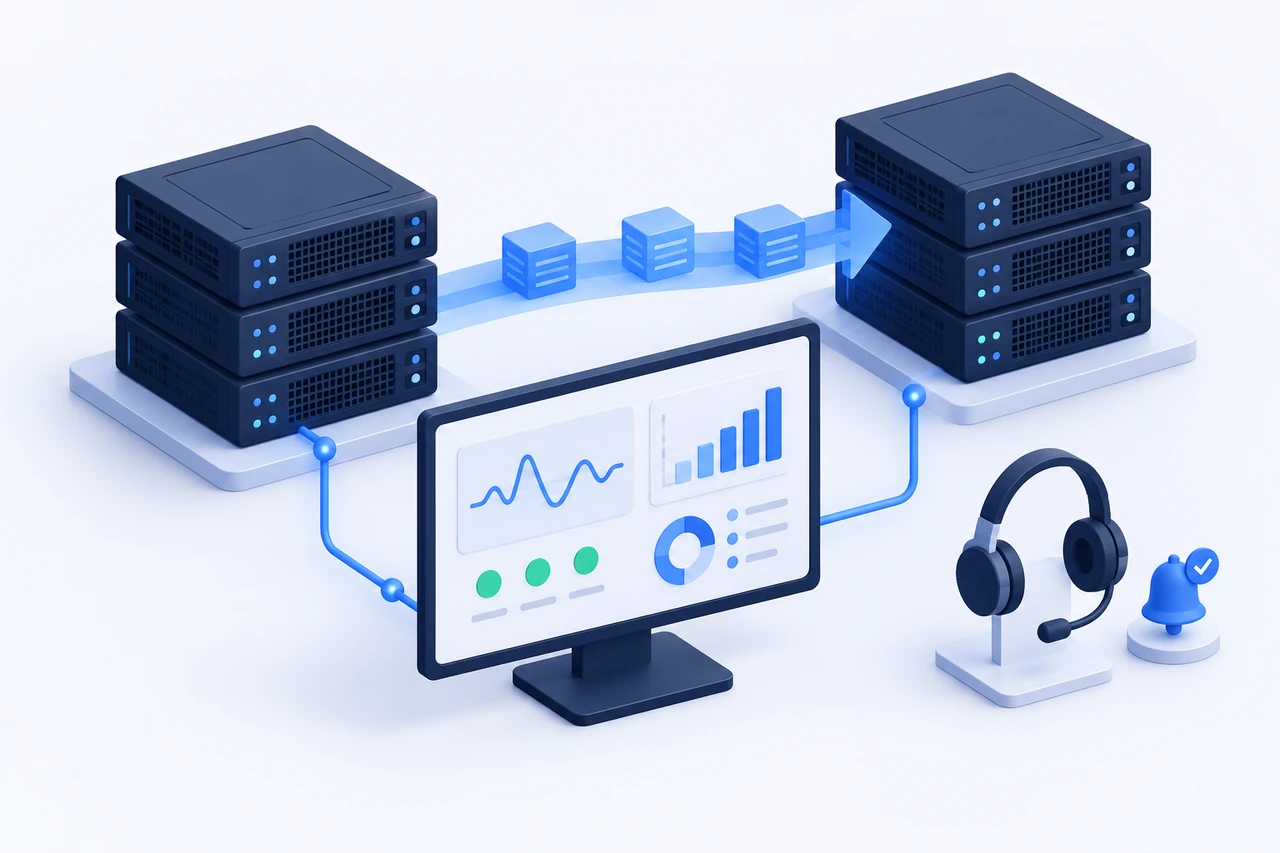
Depending on your data sensitivity and existing infrastructure, private knowledge assistants can be deployed across two dependable architectures. For maximum data sovereignty, the entire stack—vector database, embedding pipeline, and open-weights language model (such as Llama 3 or Mistral)—runs locally on dedicated office hardware under our private AI infrastructure service or containerized via Docker and containers. Zero bytes ever leave your physical office.
Alternatively, organizations with distributed or hybrid teams can host the retrieval service within an isolated private cloud cluster or secure Canadian data center. In both models, API endpoints are standard and compatible with existing desktop software or internal portals, backed by encrypted connections and comprehensive access logging. For businesses seeking a complete self-hosted office stack with built-in wikis, our ITbox self-hosted platform delivers native document collaboration with total data ownership.
Starting with a focused pilot workflow
The most successful AI implementations do not attempt to ingest the company's entire legacy file share on day one. Uncurated document shares contain outdated drafts, contradictory manuals, and obsolete spreadsheets that confuse retrieval algorithms. We recommend beginning with a tightly scoped document set: your current employee onboarding manual, technical standard operating procedures (SOPs), or vendor contract repository.
Under our custom AI knowledge assistants practice, we evaluate your document formats, test retrieval accuracy on representative staff questions, and establish clean update workflows before production rollout. Contact our Calgary engineering team to discuss your document search requirements under an agreed written scope. If the problem is retyping invoices and forms instead of searching them, see AI Document Processing for Calgary Businesses.
This guide is part of our AI Solutions coverage.
Written by YYCIT Systems Engineering
We design, deploy, and manage Linux servers, OpenStack clouds, and high-reliability systems for Calgary businesses. Direct engineering access with agreed written scopes and zero contract lock-in.